


Skiing in Kitzbühel for beginners
Kitzbühel in Tyrol offers beginners free practice slopes in the valley, local ski schools and ski hire for their first day on the slopes. Start on a clearly laid-out practice slope and learn how to brake and turn under professional guidance. Here you can find out what equipment you’ll need, where you can practise and how to plan your first day on the slopes.


Buying and Renting Ski Equipment
For beginners, it’s best to rent skis and poles at first. Once you start making progress, it’s worth buying your own equipment. In Kitzbühel, you’ll find numerous ski rental shops with a modern selection for all skill levels. If you have challenges finding normal shoes that fit, then it makes sense to buy your own ski boots that can be personally fitted, as they provide noticeable comfort right from the start. Helmets can also be rented. Since they’re versatile and fit well, they’re also a worthwhile investment for your day of skiing in Kitzbühel.
Personal ski gear includes a ski jacket, ski pants, ski socks, thermal underwear, gloves, and ski goggles or sunglasses. Sunscreen is also recommended for days in the snow. This gear will be with you all day on the slopes and should fit well and ensure your comfort.
In Kitzbühel, you’ll find a wide selection of fashion and sports stores. The range extends from affordable brands to high-quality professional and designer gear.
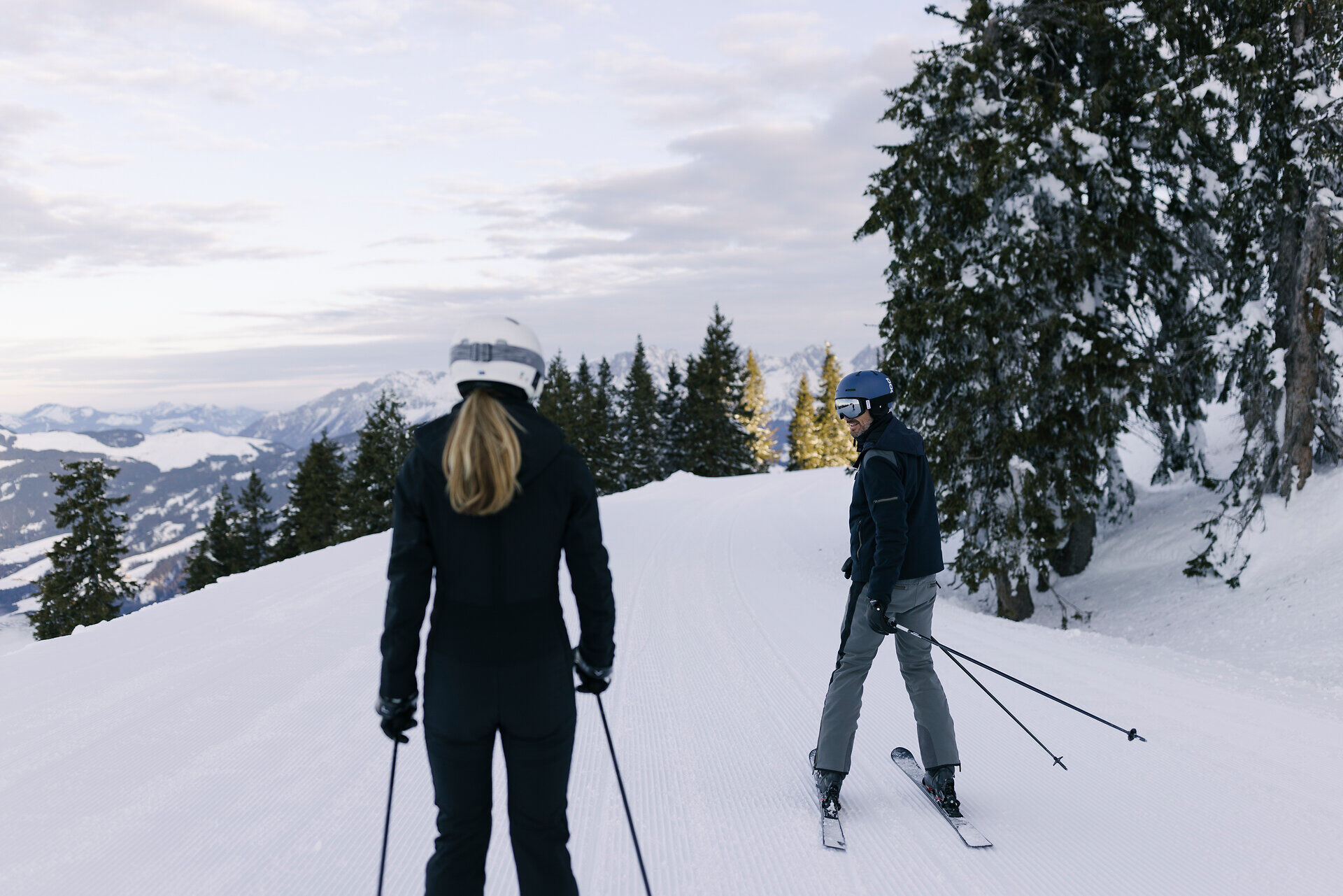
Ski schools in Kitzbühel
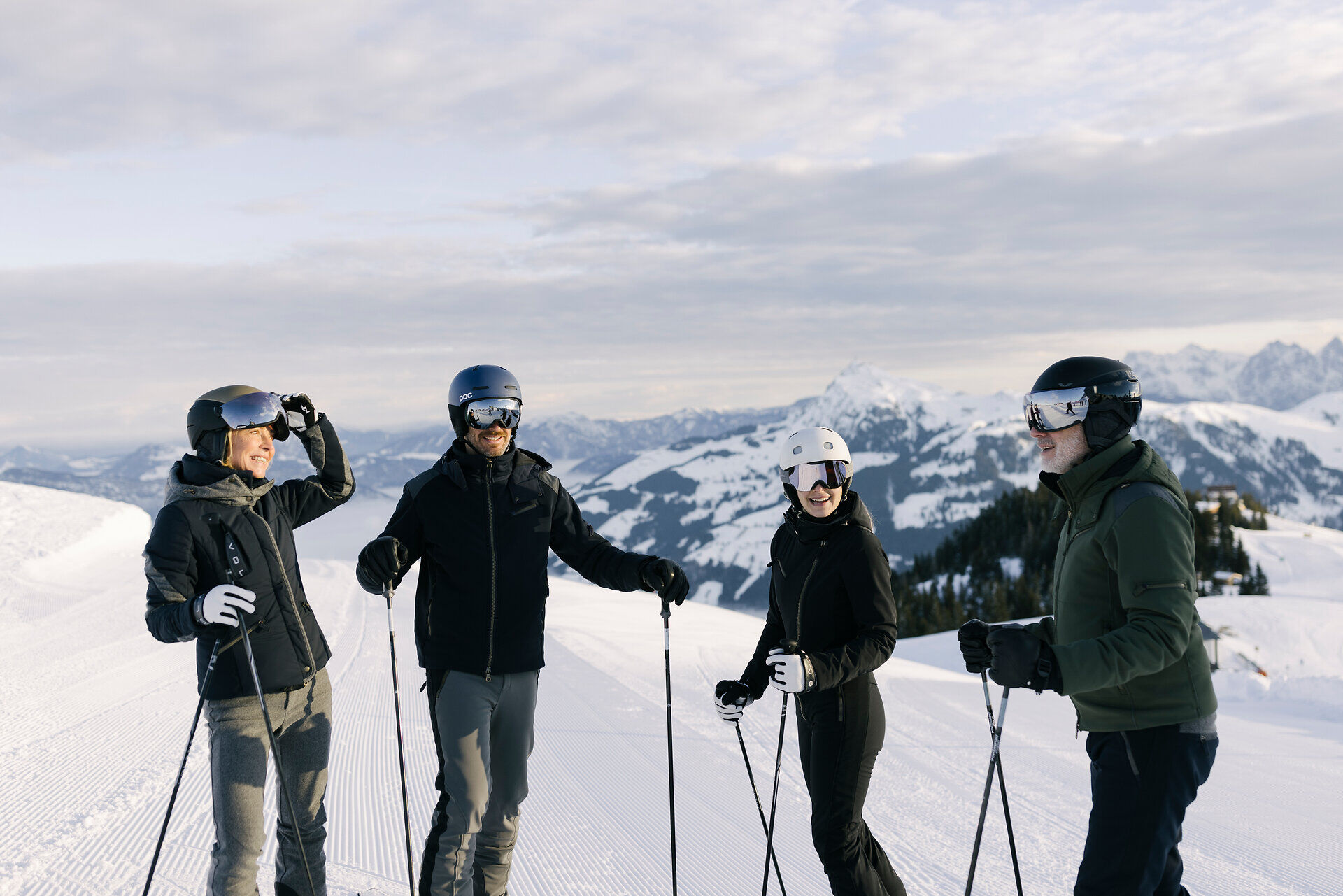
Professional ski lessons help you learn the basics step by step. Through tailored exercises, you’ll practise braking, turning and using the ski lifts. Your ski instructor will choose the terrain based on your ability and the current conditions.
Before booking, find out about group and private lessons, the language of instruction, the duration of the course and the meeting point. Your ski school will also explain what equipment and which ticket you’ll need for the course.
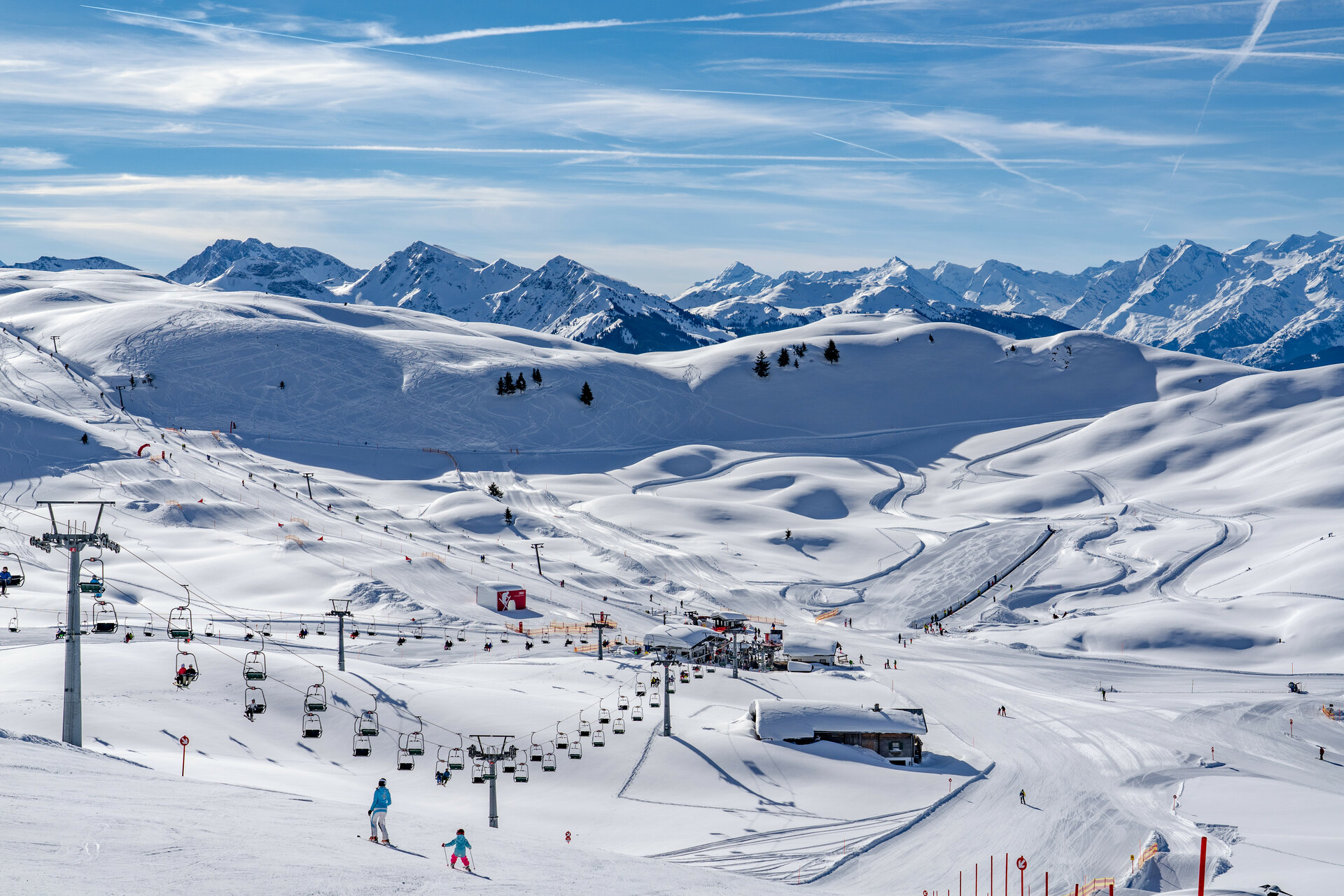
An Easy Introduction to Skiing
Free practice lifts in the valley – the easy way to get started
Several free practice lifts in the valley offer perfect conditions for your first turns on skis – ideal for beginners and families.
Kitzbühel
A2 Mocking
A3 Rasmusleiten
A4 Ministreif
Reith
E3 Practice Lift Reith
E4 Sun Cord Reith
Jochberg / Pass Thurn
F2 Hausleiten
G2 T-bar lift Pass Thurn
Kirchberg
E2 Schatzerlift
Aschau
D11 Sunkid Aschau
D10 Practice Lift Aschau
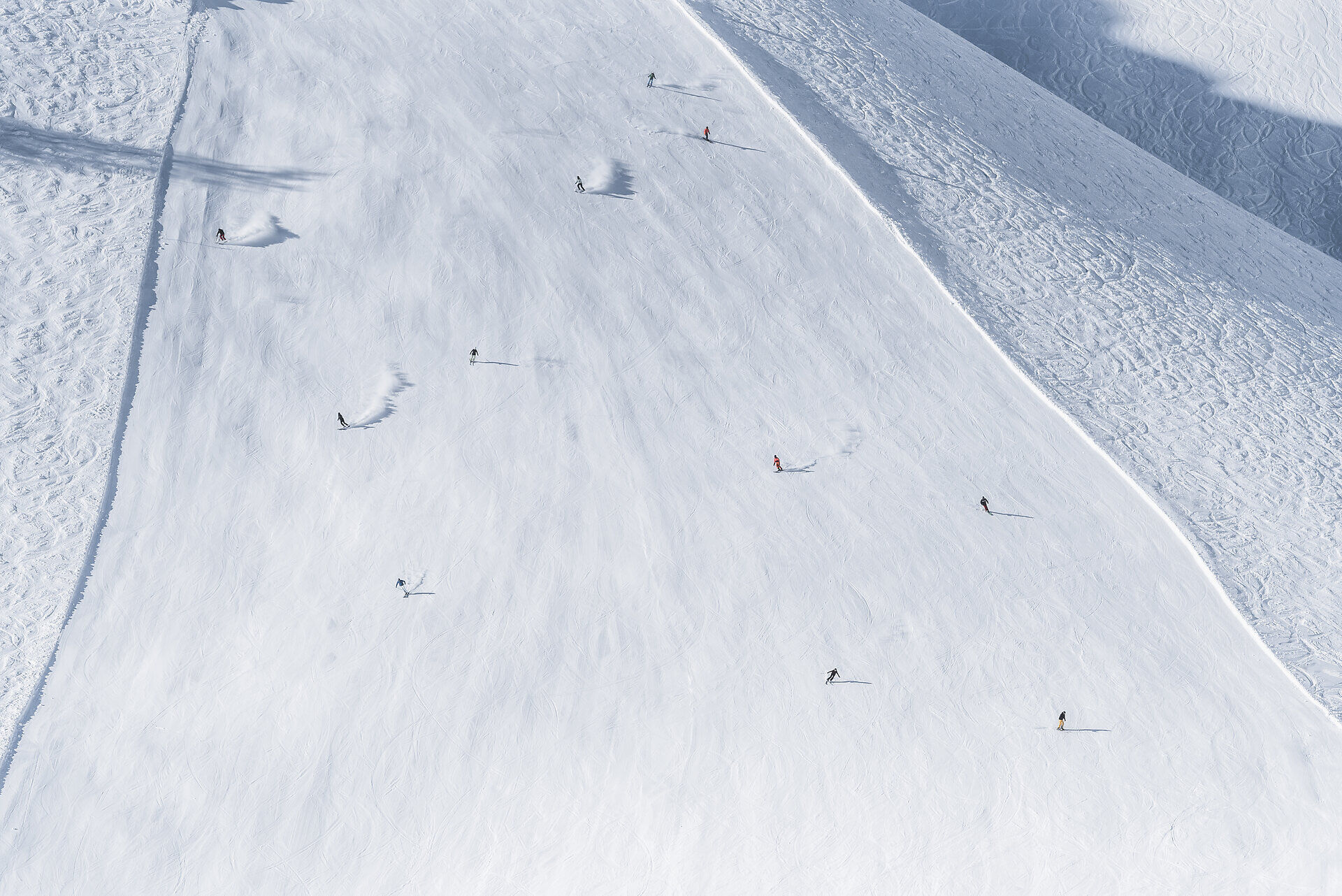
Beginner slopes on the mountain
You’ll need a ski pass for these runs. The following runs are ideal for beginner skiers.
Hahnenkammbahn (A1)
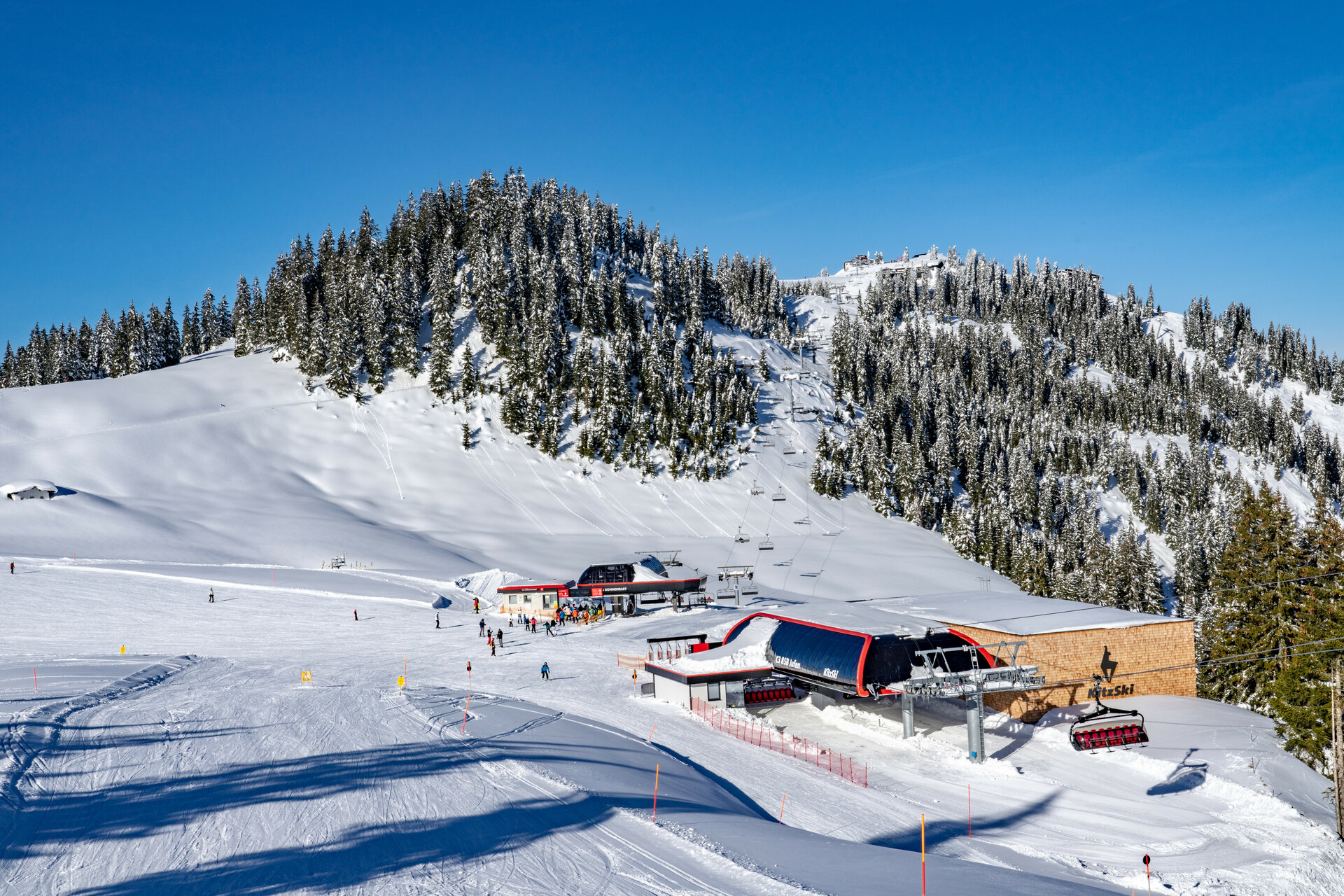
The A7 Märchenwaldlift is the most popular learning area on the mountain. From here, beginners can take the Waldpiste (21) to the Wald chairlift (A8) and later continue on trail 37 toward Melkalm.Fleckalmbahn (B1)
Around the Ehrenbachhöhe, there are several easy slopes, ideal for practicing and improving: Sonnenrast (18), Kaser (16), and Kaser (26).Maierlbahn (B2)
Perfect for confident snowplow skiers with good control. The Maierlbahn connects to the Ochsalm chairlift via a tow path.Panoramabahn (G9 II) / Resterhöhebahn (G1)
Run 70b – Resterkögel is a pleasant, easy descent and ideal for relaxed turns in a quiet setting.
We especially recommend that beginner skiers tackle these slopes with a ski instructor at first.


How quickly can you learn to ski?
Everyone learns at their own pace. How quickly progress comes often depends on sporting background and experience in other sports with transferable skills. Athletic people can often learn to stop safely in the snowplough within half a day and link their first basic turns within a full day. Others may need more time to become comfortable with the feeling of sliding on snow.
The most important thing is to begin without expectations — practice and repetition are simply part of the learning process.
Skiing is a full-body workout. For beginners, two to four hours a day is ideal. Even experienced skiers usually don’t spend more than five hours on the slopes. Taking regular breaks helps you recharge, maintain proper technique, and keep skiing fun.
In Kitzbühel, temperatures can range from -15 °C to +15 °C. Wearing multiple layers of clothing offers flexibility. On cold days, insulating layers keep you warm, while a lightweight shell jacket is ideal in milder temperatures.
Due to the high altitude and snow reflection, UV radiation in the mountains is stronger than expected. Use sunscreen with cold protection and wear ski goggles to reliably protect your eyes—even on cloudy days.
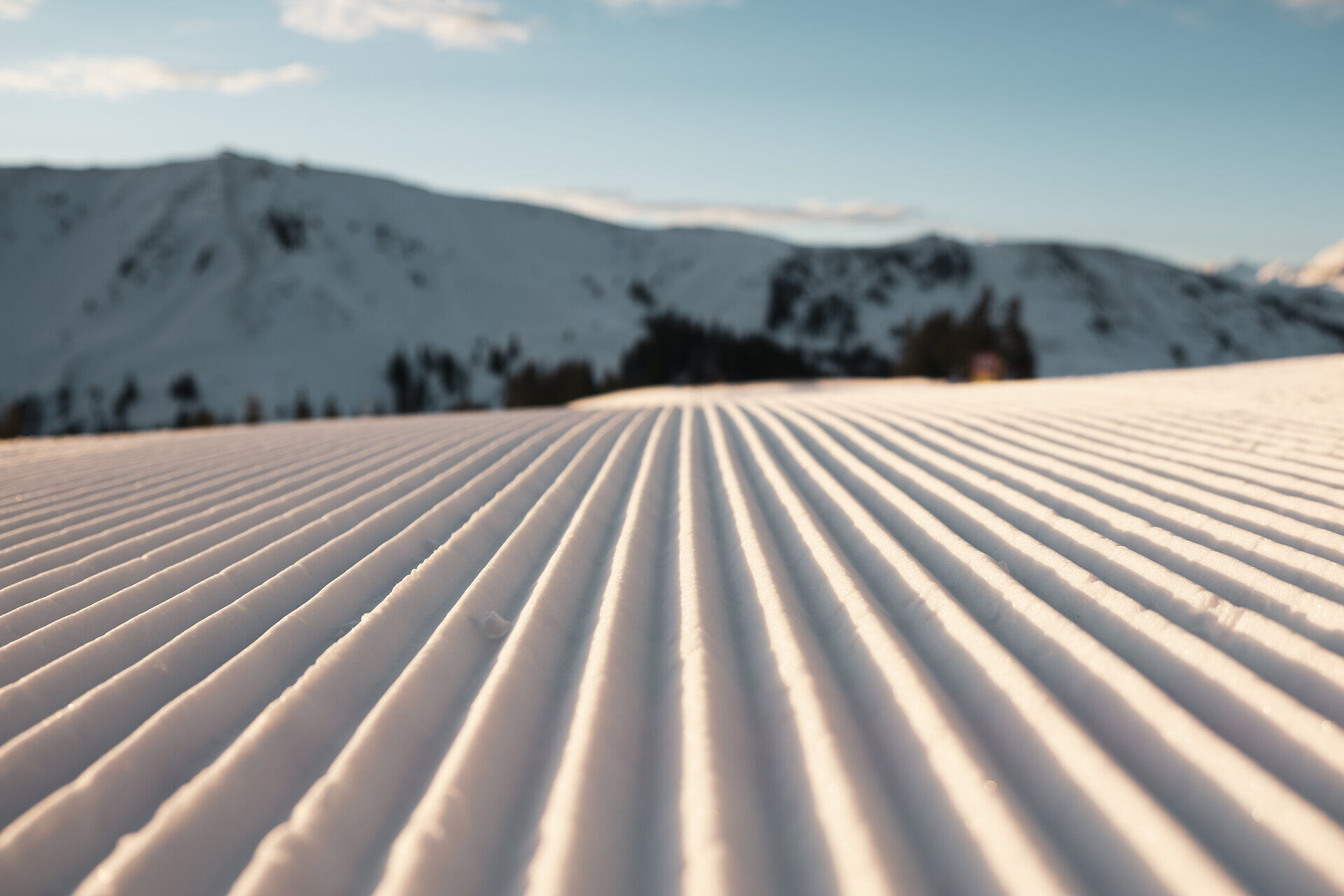
Ski conditions can vary—from firm snow to softer surfaces. Beginners usually feel most comfortable on grippy, even snow. Snow conditions may change during your stay.
The weather in the mountains is unpredictable. Sun, clouds, and fog are all part of the experience. With the right gear and a guide, you can navigate any weather conditions safely and confidently.
Skiing is considered a safe winter sport. Kitzbühel has a comprehensive network of rescue and medical services. Travel and accident insurance provides additional peace of mind during your stay.
FAQ
The free practice slopes in the valley are ideal for those taking their first steps on skis. Those who can already brake and turn with control will find further learning opportunities, for example at the Märchenwald lift and around the Ehrenbachhöhe. You should choose the right run based on your ability and the current conditions. We outline the individual areas under ‘Beginners’ slopes on the mountain’.
Yes. It is advisable to book well in advance, particularly during the holiday periods. When doing so, please clarify the meeting point, equipment and the ticket required.
You can use the practice slopes in the valley, which are explicitly free of charge, without a paid ski pass. For other lift facilities, the relevant ticket terms and conditions apply.
Yes. Local ski schools offer lessons for adult beginners. Please contact the relevant provider for details of group or private lessons, course times and the language of instruction.