


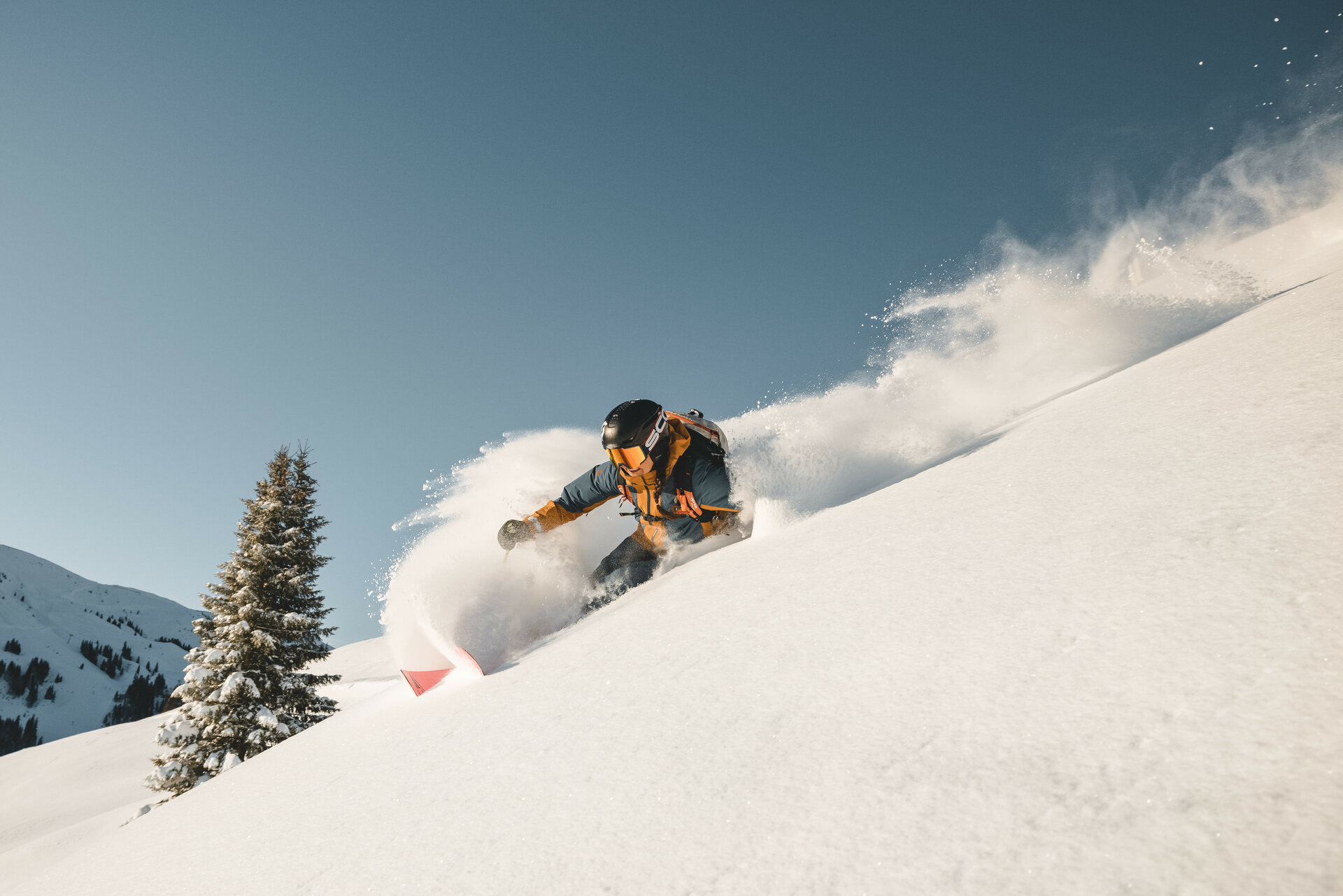
Freeriding - Pure Powder Fun
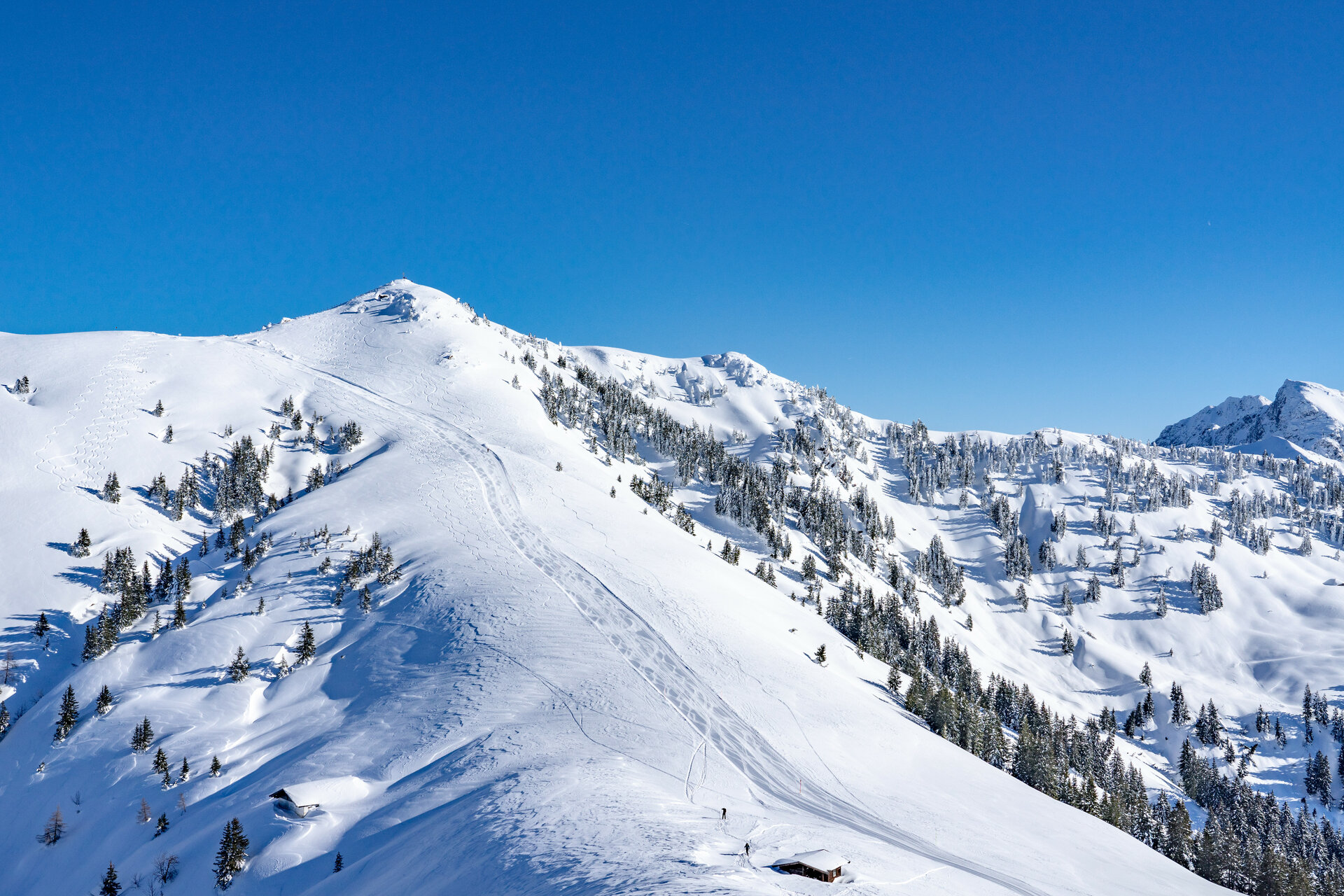
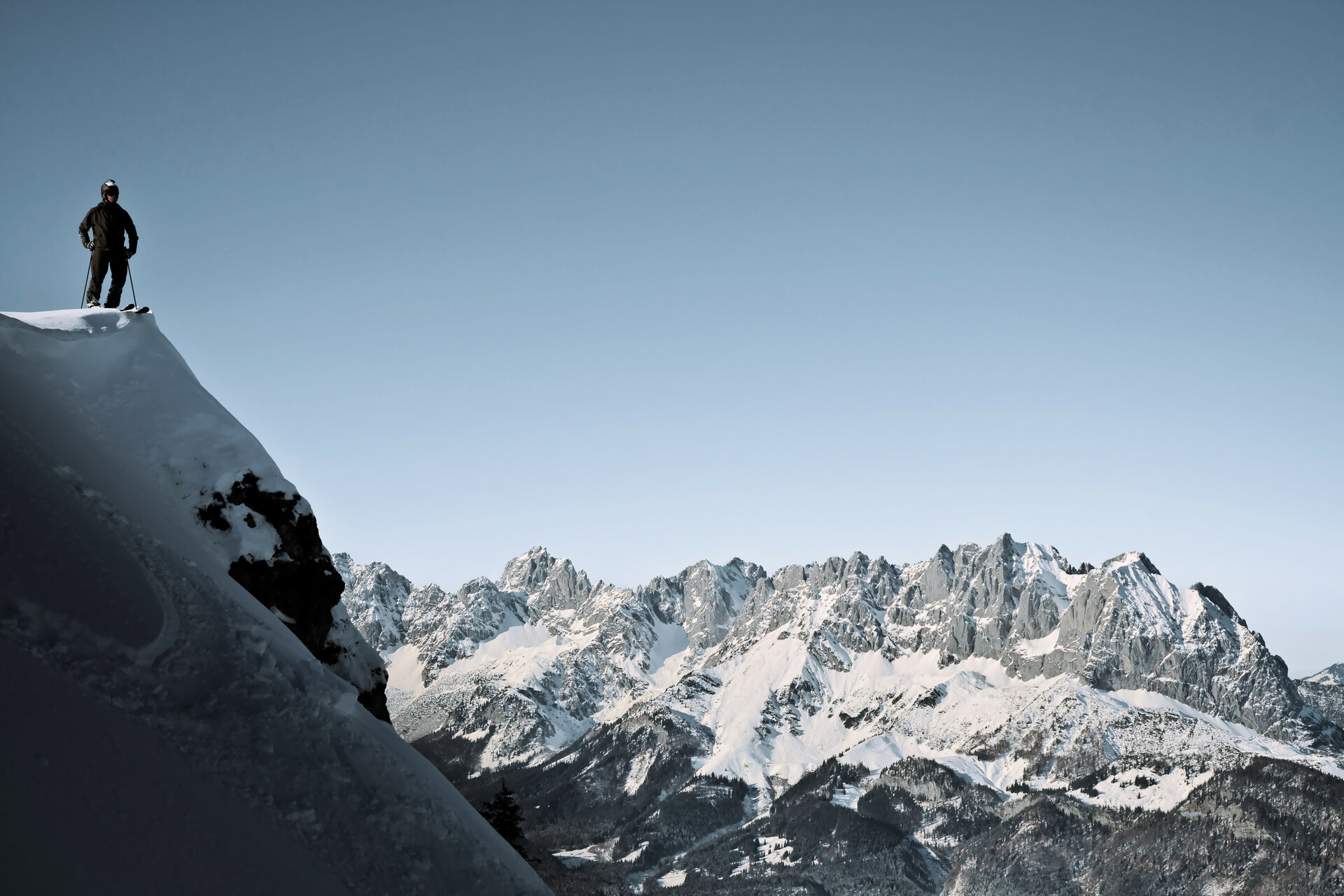
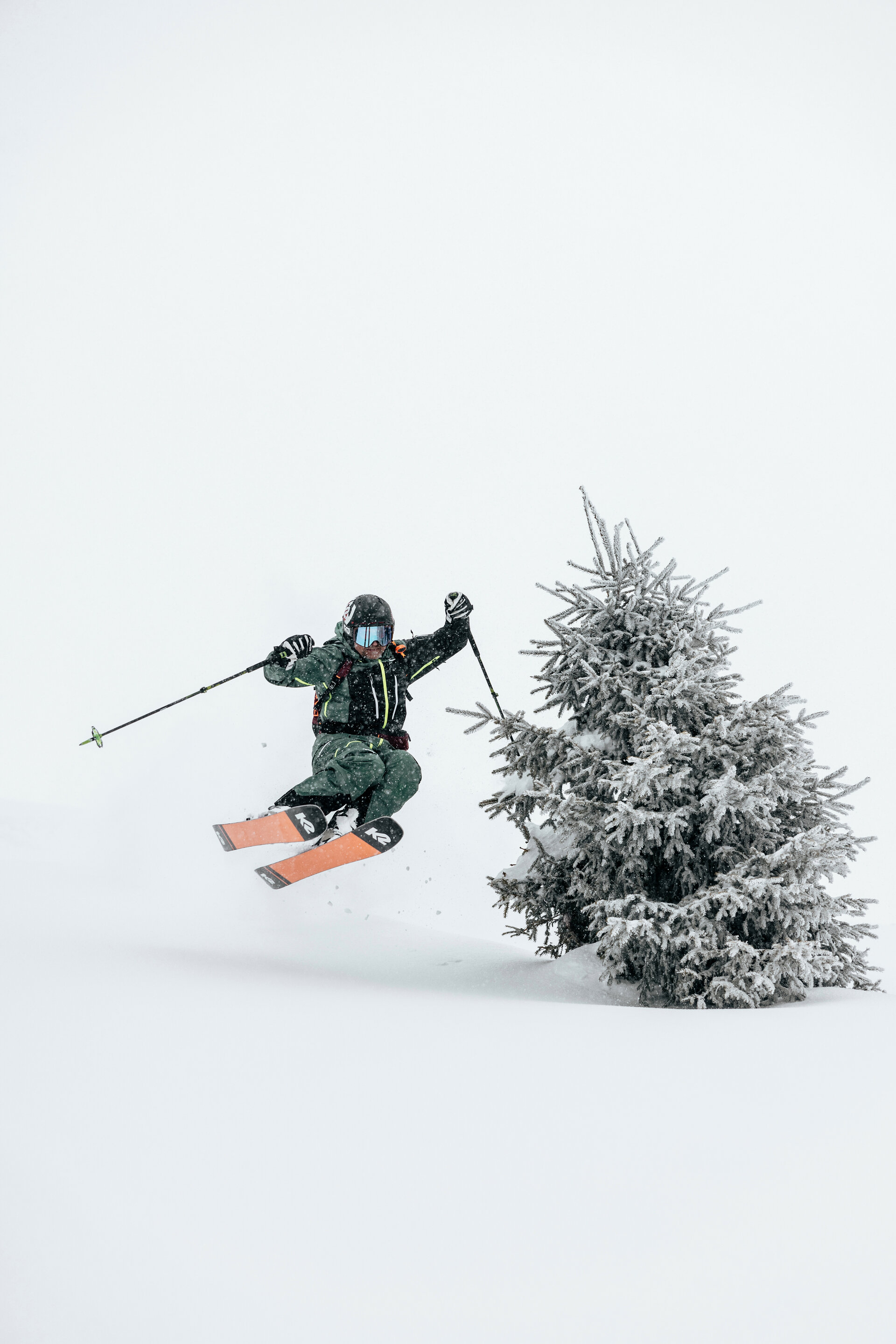
Freeriding in Kitzbühel remains something of a hidden secret. Here, it’s less about extreme high-alpine terrain and more about wide-open off-piste runs and tree-lined descents, leaving fresh tracks in untouched snow with quick access from the lift network. Between the Kitzbüheler Horn, the Hahnenkamm, and Pass Thurn, the snow-covered landscapes are among the most recognisable and beautiful in Austria.


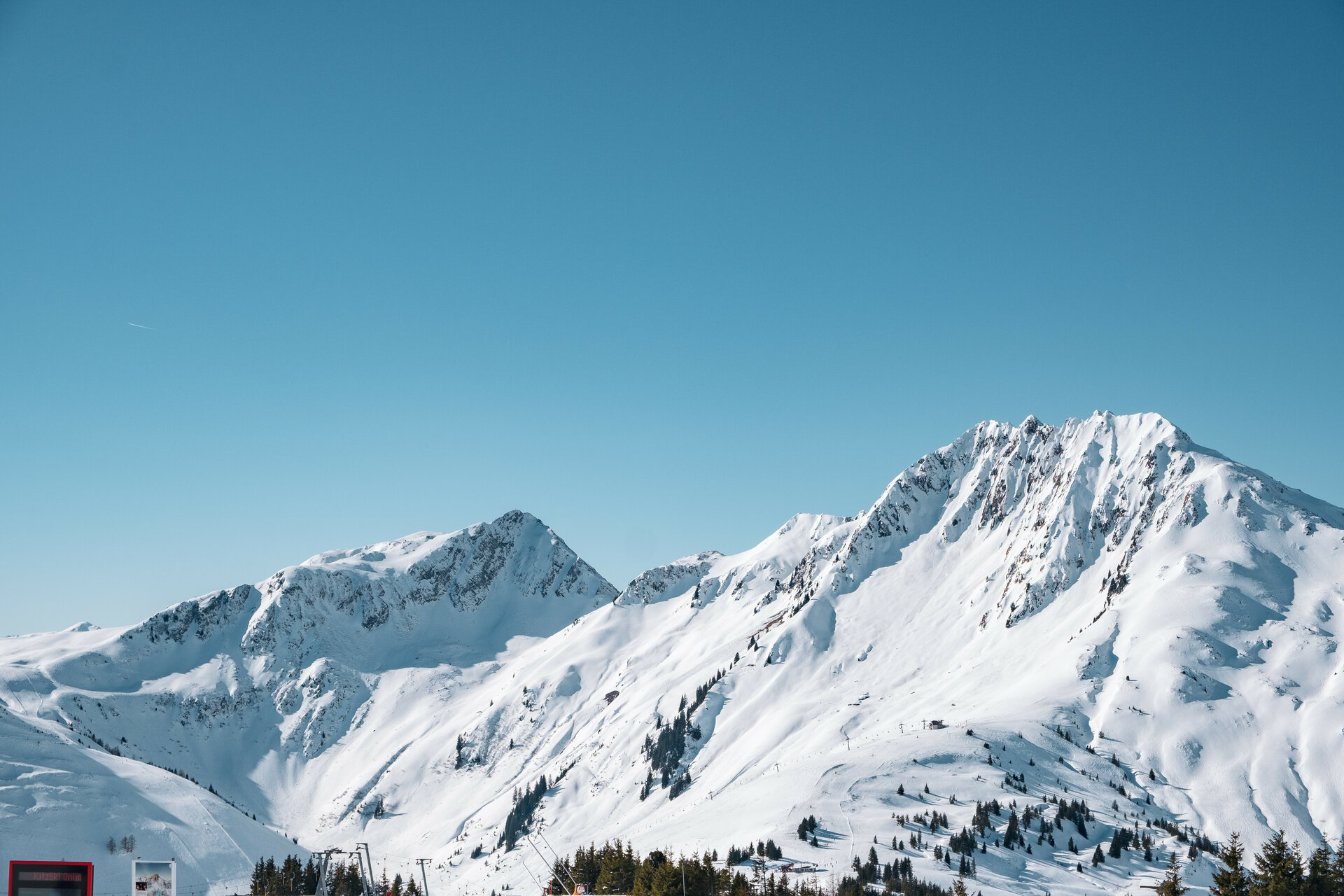
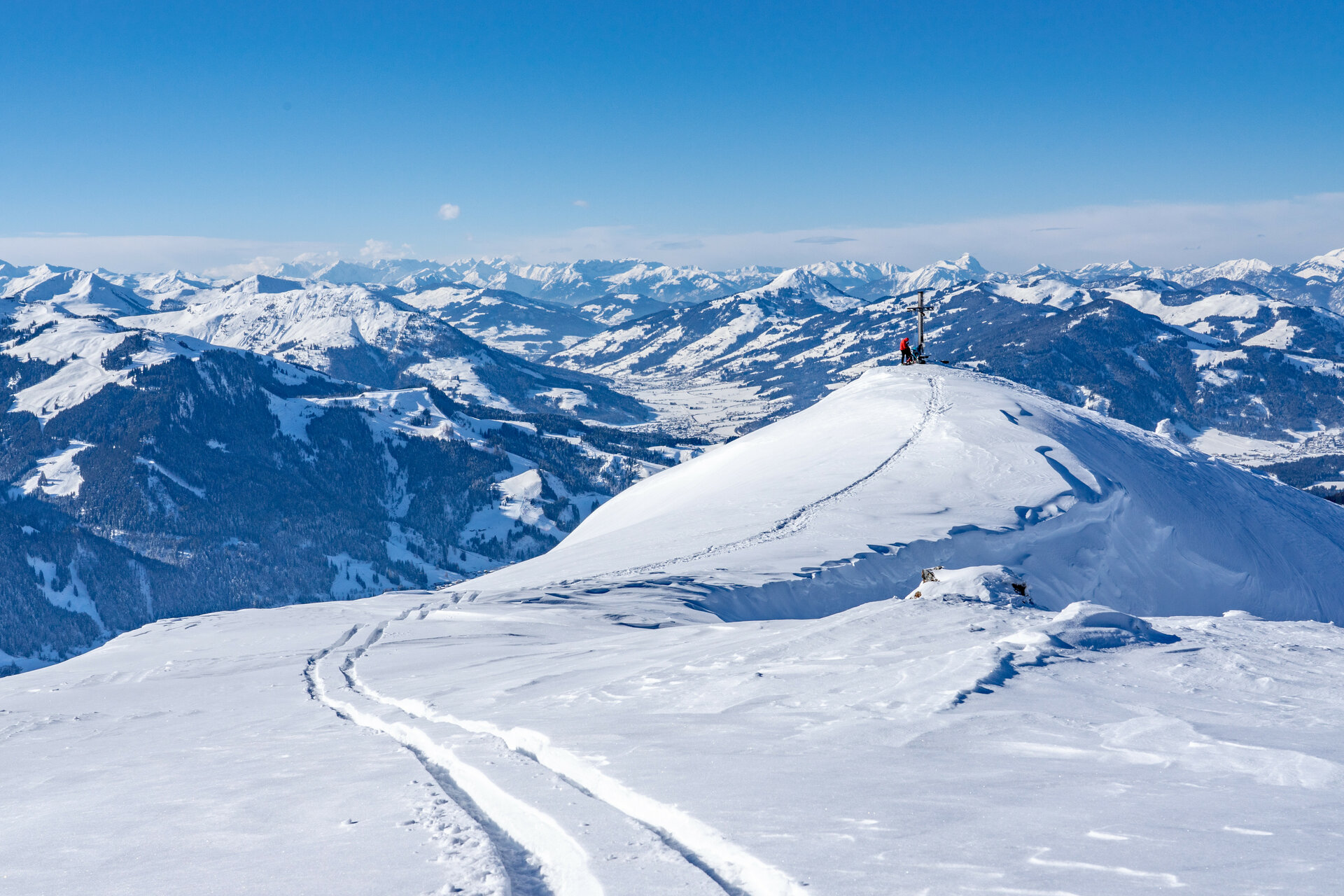
A freeride destination since 1893
In 1893, Franz Reisch made the first ski descent from the Kitzbüheler Horn—as a freeride pioneer, his spirit continues to shape Kitzbühel to this day.
- Over 200 km² of terrain around Kitzbühel
- 6 freeride zones – Hahnenkamm | Pengelstein | Kitzbüheler Horn | Südberge | Jochberg | Resterhöhe
- Responsible freeride culture: 6 avalanche transceiver checkpoints & numerous protected areas
- Freeride terrain accessible by lift or with touring skis
- Good visibility, and quick access
Understanding Freeriding: Assessing the Terrain Correctly
All areas outside marked pistes, and official ski routes are considered unsecured terrain. These areas are not marked, controlled, protected from alpine hazards, or monitored for avalanches—meaning you are fully responsible for assessing conditions and making safe decisions.
In short: terrain where personal responsibility, experience, and sound judgement are essential.
All areas outside of marked trails and ski routes that lack signage, safety measures, or avalanche monitoring—here, you are entirely responsible for your own safety.
- In short: Unsecured terrain where you must assess the risks yourself.
Marked and signposted runs within the ski area that are monitored for avalanches but are not groomed and may contain natural obstacles.
- In short: Controlled natural terrain.
Marked, groomed pistes, and avalanche-safe ski slopes, for which the operator is responsible during operating hours.
- In short: Controlled terrain with the highest safety standards. Graded Blue, Red or Black in difficulty.
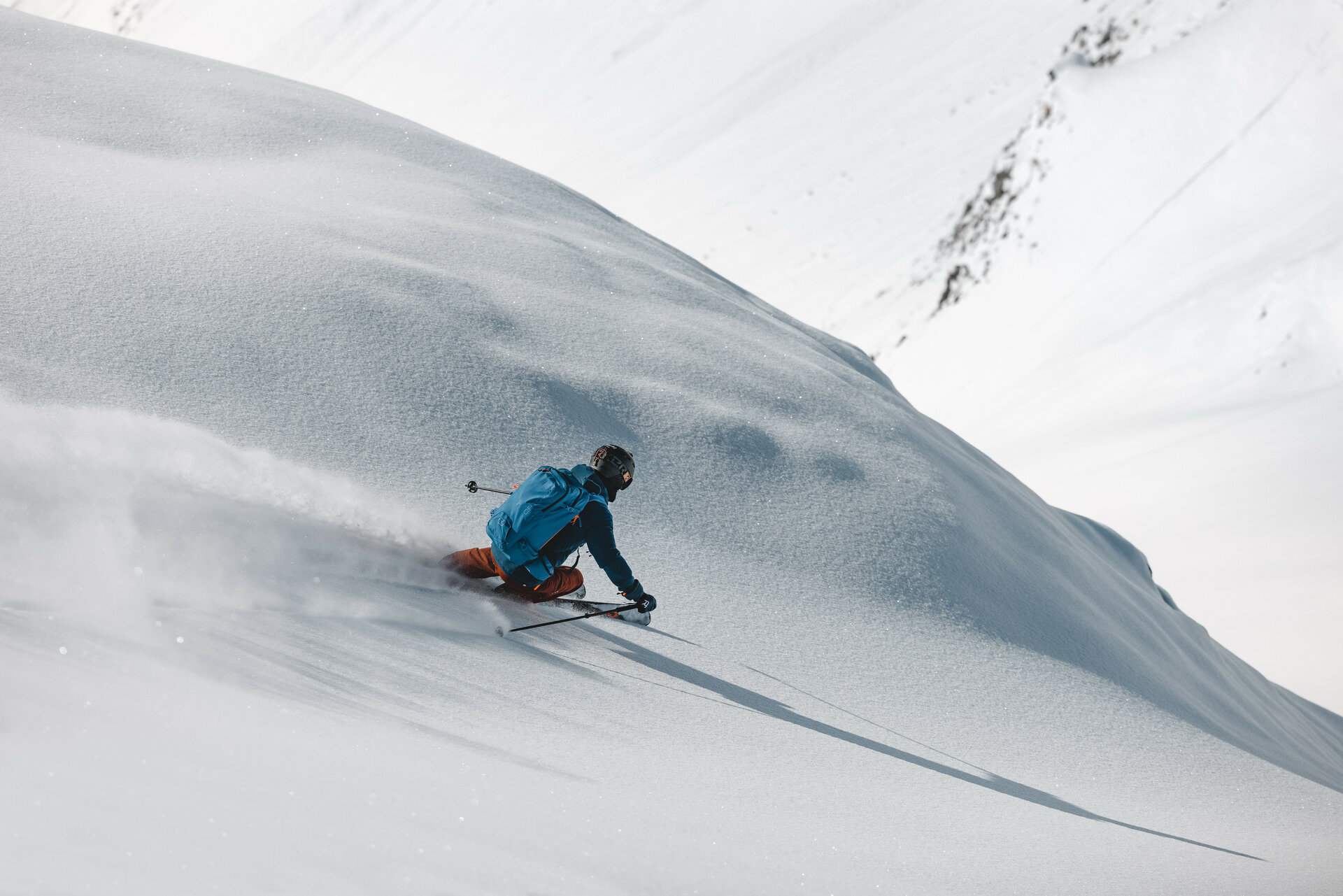
Responsible Freeriding
Freeriding means freedom—and personal responsibility. Anyone venturing off the marked pistes must be able to accurately assess alpine conditions and be well prepared.
Good freeriders know:
- Personal responsibility is key in open terrain
- An avalanche transceiver, shovel, and probe are standard equipment
- The avalanche report should be checked daily
- A first-aid kit and bivouac sack increase safety
- An avalanche airbag can provide additional protection
- Nature reserves must be respected
- Never ride alone
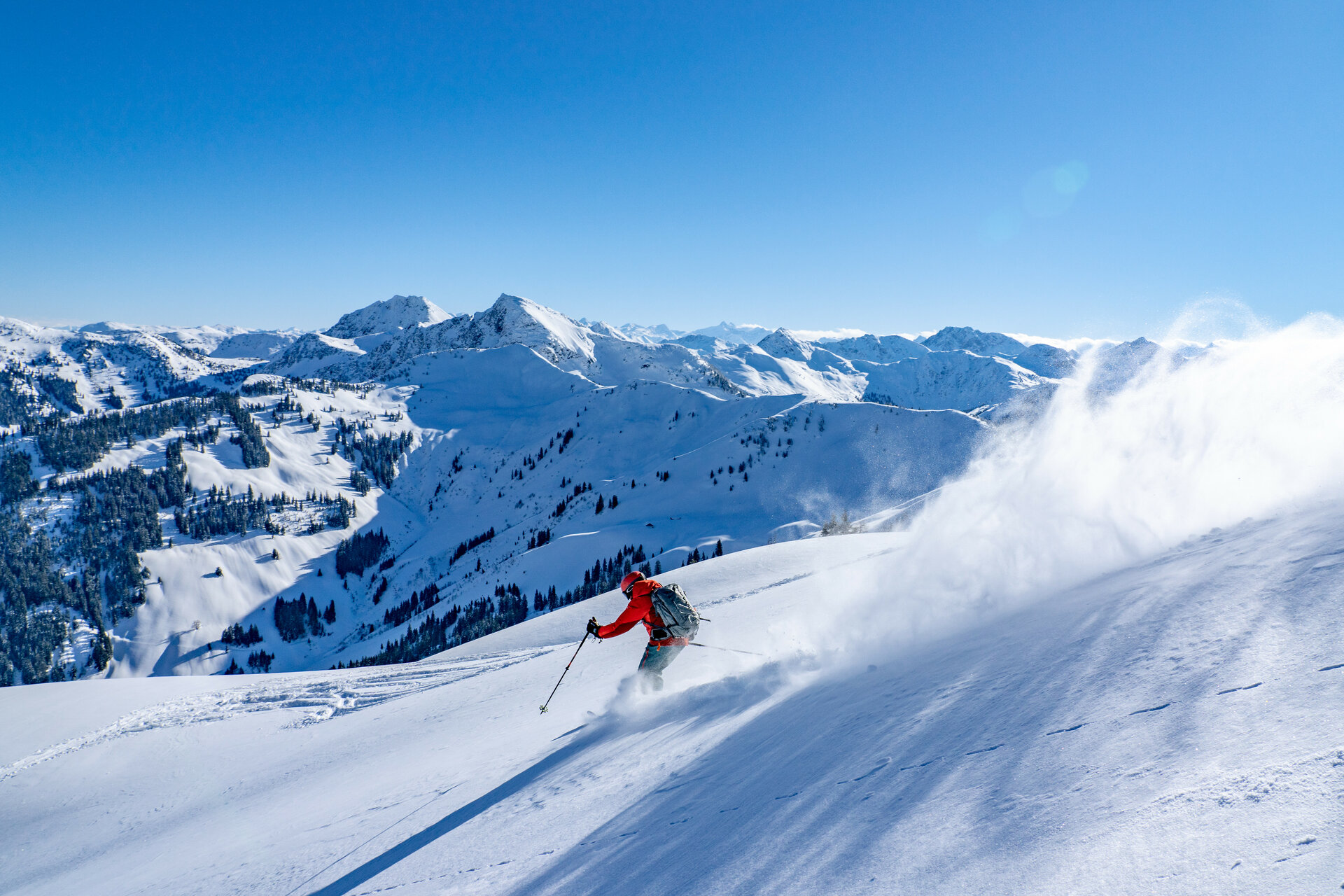
Kitzbühel Mountain Guides
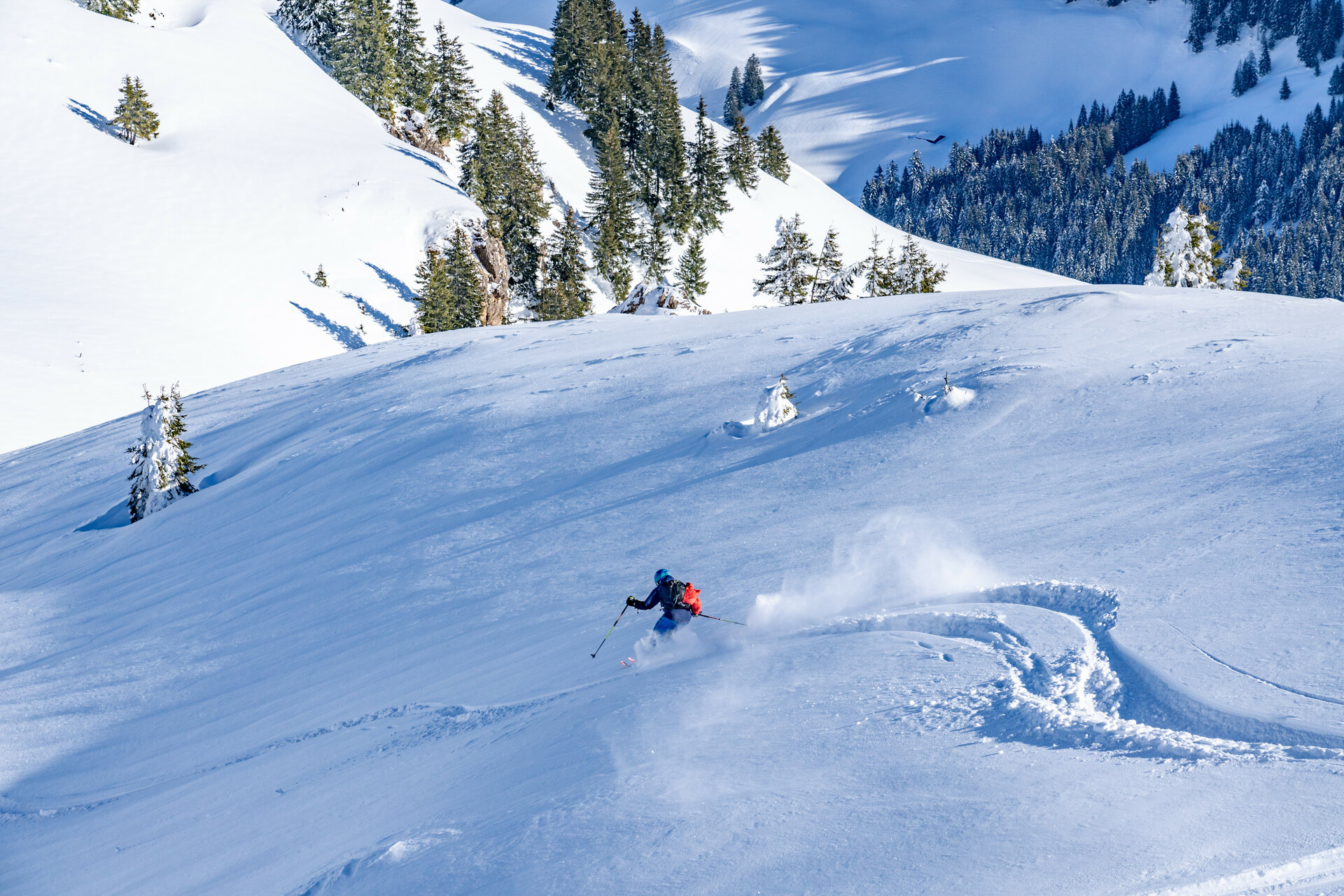
The Kitzbühel mountain guides are state-certified professionals with extensive knowledge of the terrain, snow conditions, and safety. Especially when it comes to freeriding, they not only know the current conditions but also the hidden lines and runs that are nearly impossible to find on your own.
Your benefits at a glance:
- Maximum safety: State-certified, experienced in route planning and risk assessment.
- Insider knowledge: Familiarity with the best lines, terrain features, and snow conditions.
- Customised tours: Routes tailored to your skill level, preferences, and daily conditions.
- More than just guiding: Tips on technique, avalanche awareness, and decision-making in the mountains.
Respect gets Respect
Away from the groomed slopes, you’ll experience Kitzbühel at its most serene. Every turn in the untouched snow feels intense and pure.
At the same time, freeriding in Kitzbühel demands respect for nature, flora, and fauna. Thoughtful behavior protects sensitive habitats and preserves this alpine diversity for the long term.
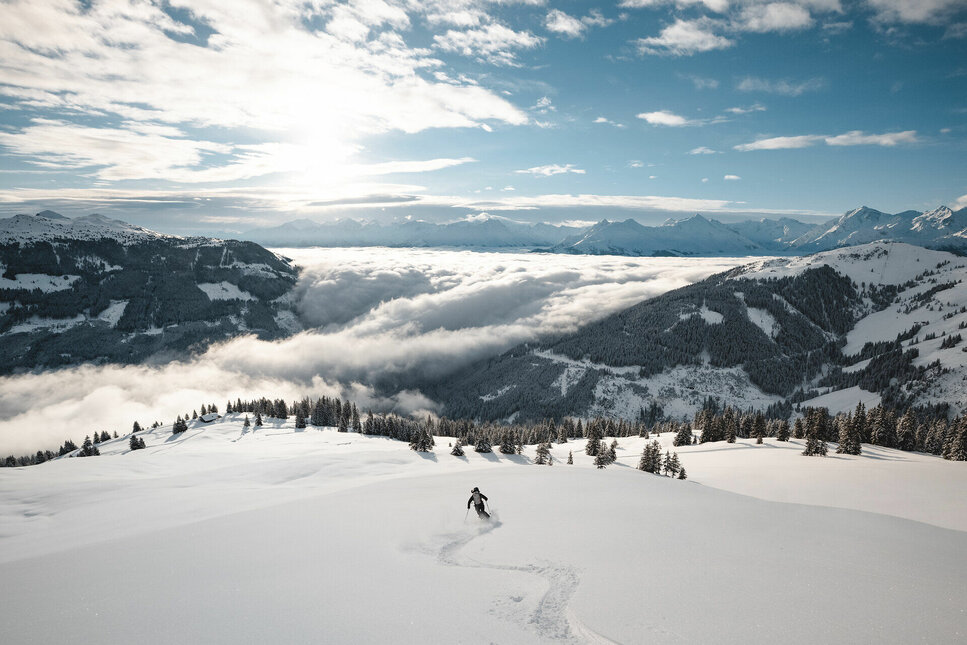
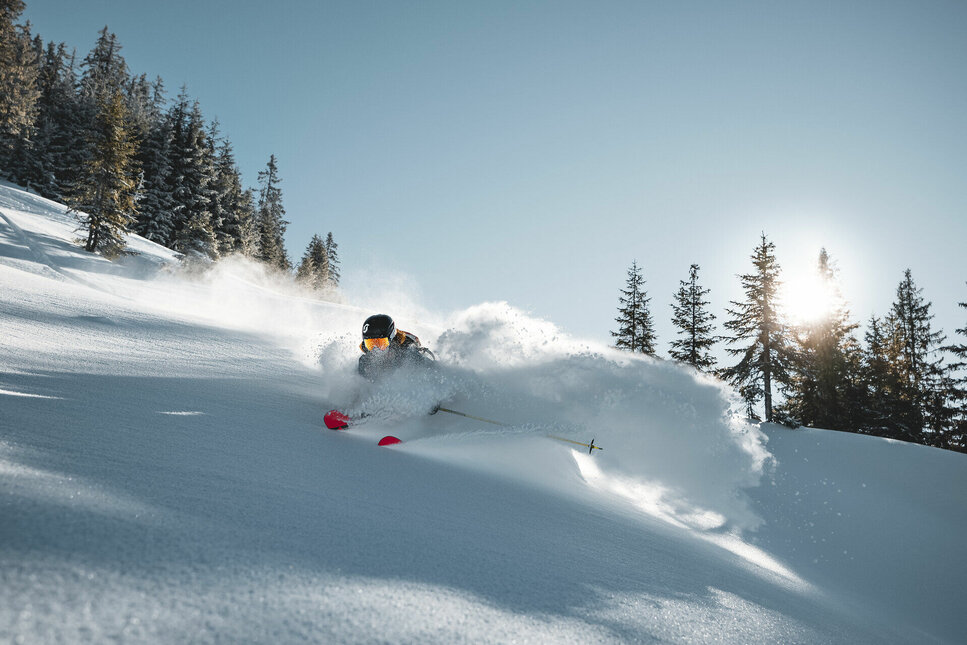
To fully enjoy the unparalleled freeriding experience in Kitzbühel, please always check the daily avalanche advisory and snow report, and only venture into unsecured terrain if you are carrying the appropriate safety equipment. If you do not have the necessary experience or would like to refresh your knowledge of backcountry basics, we recommend our local freeride guides, who will lead you safely through the deep snow-covered terrain of the Kitzbühel mountains.
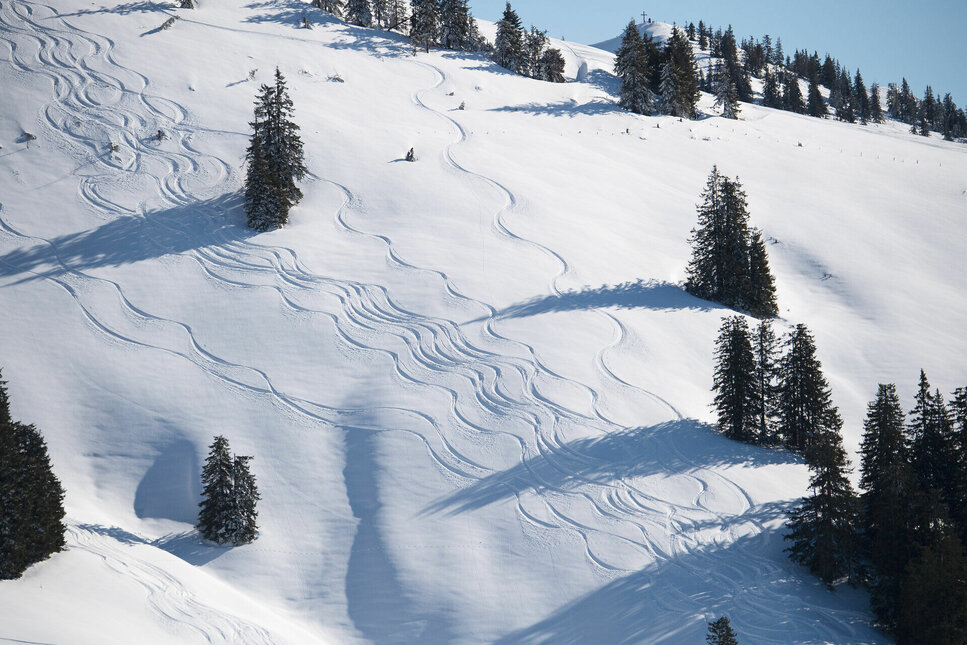
"Freeride & Ski Touring 101" is a training programme offered by local mountain and ski guides. The course covers practical emergency management in the event of an avalanche—from making an emergency call through to a successful search—as well as best-practice safety procedures for freeriding and ski touring, from route planning to choosing suitable terrain and assessing conditions.
Check in at various avalanche safety checkpoints to make sure your gear is up to date. That way, nothing will stand in the way of your perfect off-piste adventure.
LSV Checkpoints
- Hahnenkamm – Mountain station
- Steinbergkogel - Mountain station
- Pengelstein I
- Horn Alpine Hut
- Hanglalm – Mountain station
- Wagstätt
- Fleckalm – Mountain station
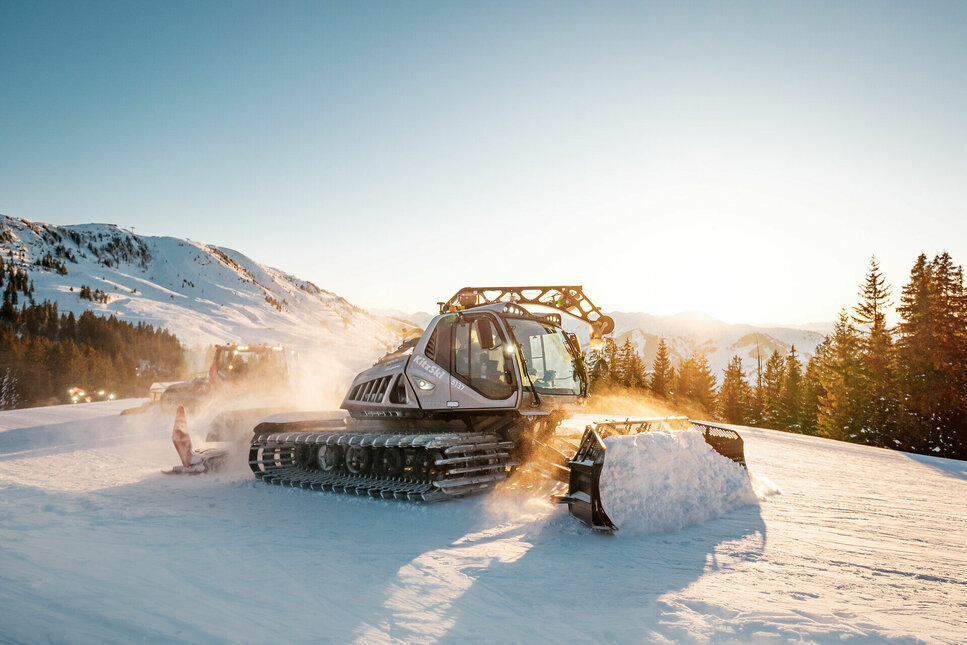
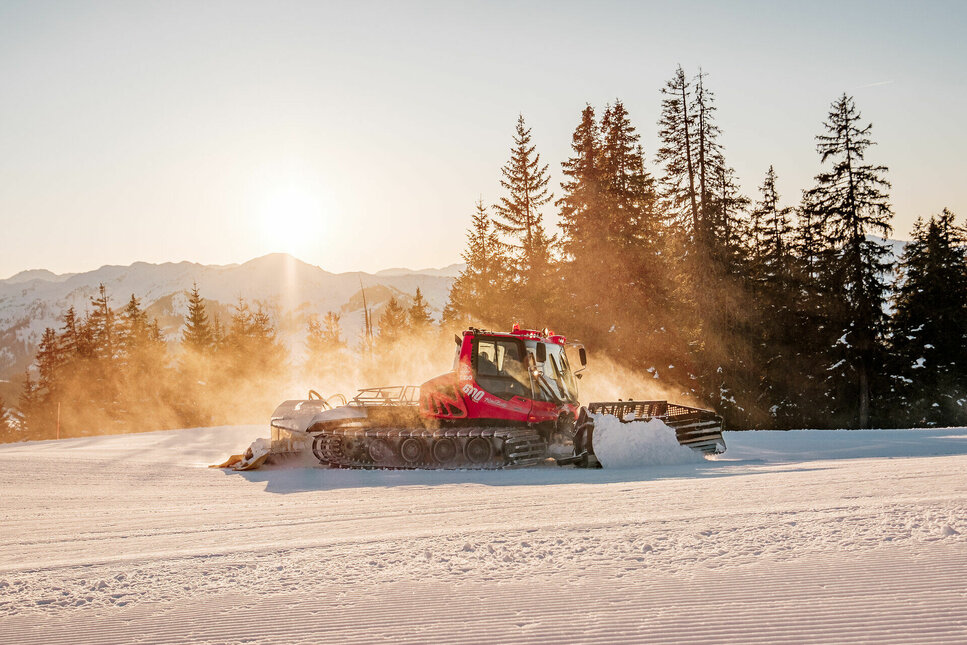
Would you like to experience a breathtaking freeride adventure in the Kitzbühel ski area—reaching the summit comfortably and full of energy? With its modern snowcat, equipped with a passenger cabin for up to nine people, Bergbahn AG Kitzbühel offers a shuttle service to the summit of the Stuckkogel this winter.
The snowcat departs every 30 minutes between 09:30 and 13:00 from the top station of the Bichlalm lift. Registration is available at the Horn ticket office (“Kassa Horn”) or directly at the Bichlalm. Learn more here.
FAQ
Freeriding in Kitzbühel refers to skiing off-piste in open alpine terrain.
For experienced skiers with solid technique and knowledge of alpine risks.
With proper preparation, up-to-date avalanche information, and the right gear, freeriding is easy to plan.
A guide is recommended, especially if you are unfamiliar with the area or have little backcountry experience.
The publicly accessible area covers more than 200 square kilometers.
An avalanche transceiver, probe, and shovel, as well as a helmet and weather-appropriate clothing, are essential.
The LSV Safety Checkpoints in Kitzbühel are located at key entry points to the freeride terrain: at Hahnkamm (mountain station), Pengelstein I, near the Horn Alpenhaus, at Hanglalm (mountain station), Wagstätt (mountain station), and at Fleckalm (mountain station). There, you can check your avalanche safety equipment before heading into the off-piste terrain.
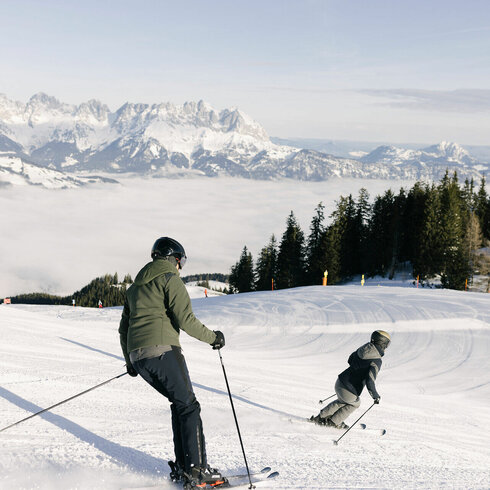
Before venturing into off-piste terrain, a strong and confident foundation in piste skiing is essential. Skiers should already feel comfortable parallel skiing on all pistes in a controlled and confident manner.
Building on these skills alongside a qualified guide, the fundamental techniques of freeriding and ski touring can then be learned. These experiences help develop alpine safety awareness, terrain understanding, and the best practices required for travelling beyond the marked slopes.
Conditions depend on snow conditions and the weather. Current reports are key.
Yes, many areas are also suitable for ski touring with proper planning.
It is a key factor in planning any trip.
Yes, a shuttle service will take you comfortably to the Bichlalm.
Directly from Kitzbühel Tourism or from local mountain and ski guides.